The comic that explains where AI actually lives.
1Pick your reader level
Young kids
Bright, gentle panels: where do your videos live? Big pictures, short words, try-this prompts.
Middle school
How power, water and chips connect, with fact chips you can check.
High school
Tradeoffs and debates: who decides where a data center goes, and why it matters.
Adult edition
Edgier and sharper on the real fights over power and water, still nonpartisan, no real names, no gore.
2Free sampler
Free 4-page sampler
Download a free 4-page preview of the first GOTB comic about where AI actually lives. PDF, about 0.8 MB.
AI-generated art, fictional characters
3Meet the characters
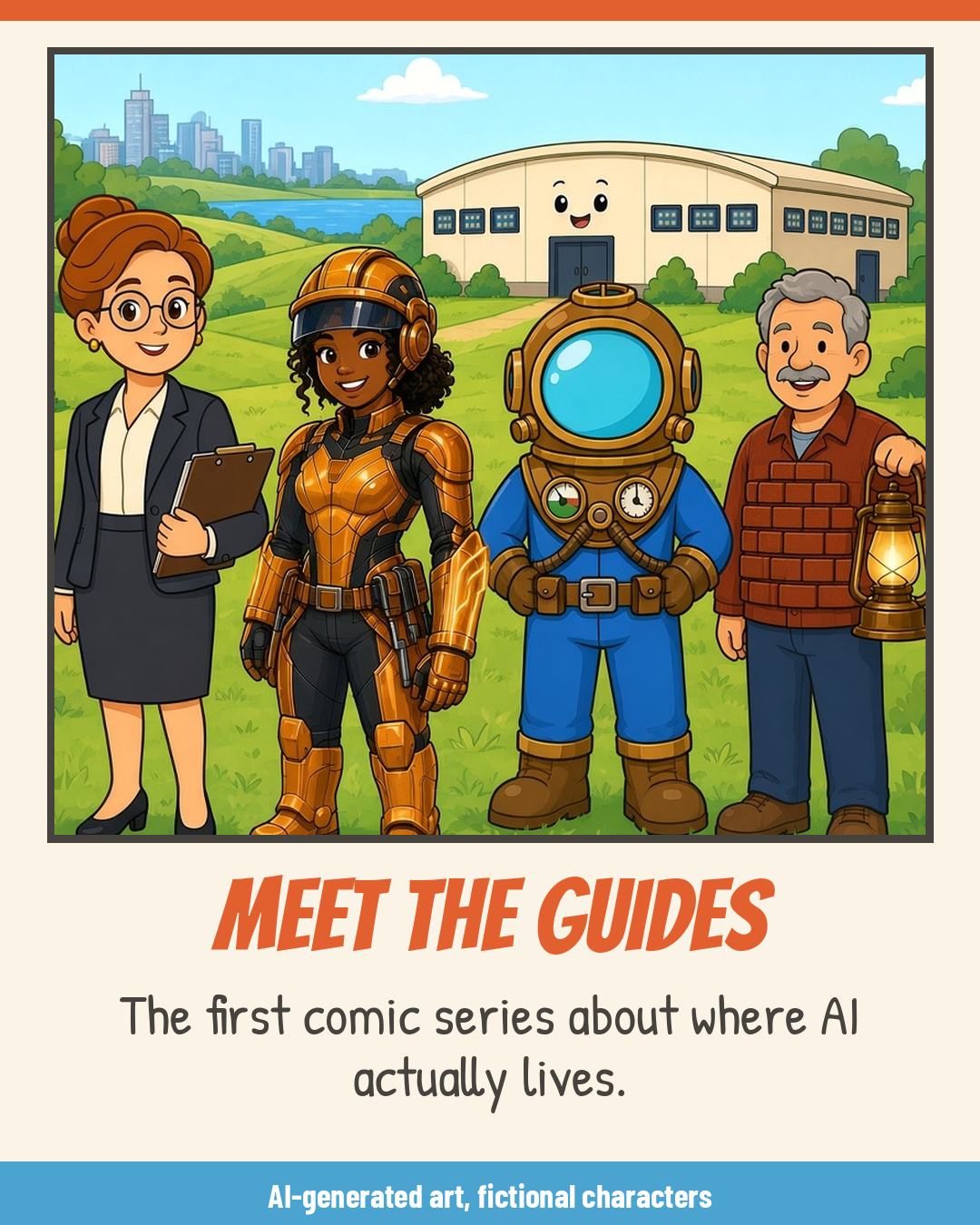
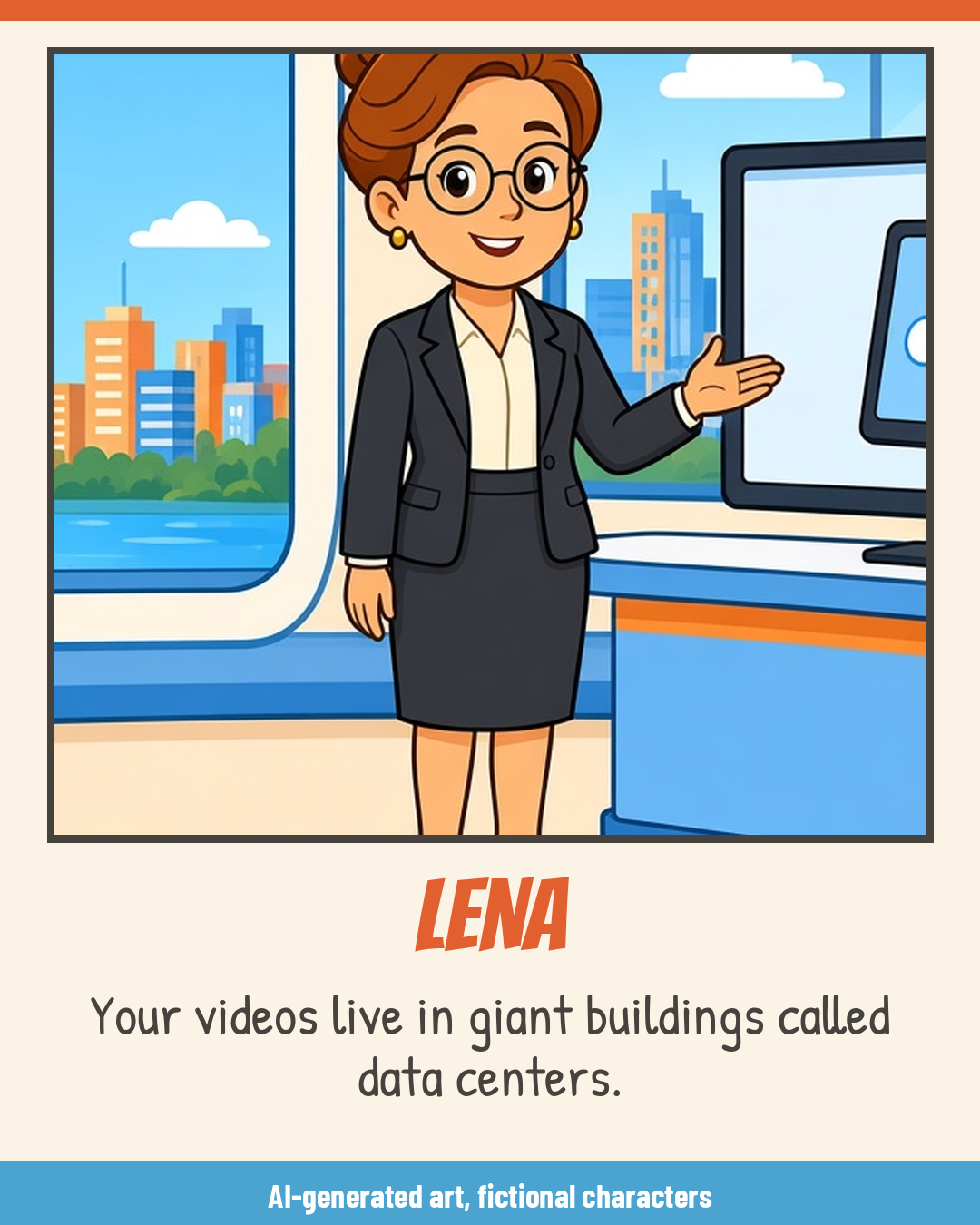
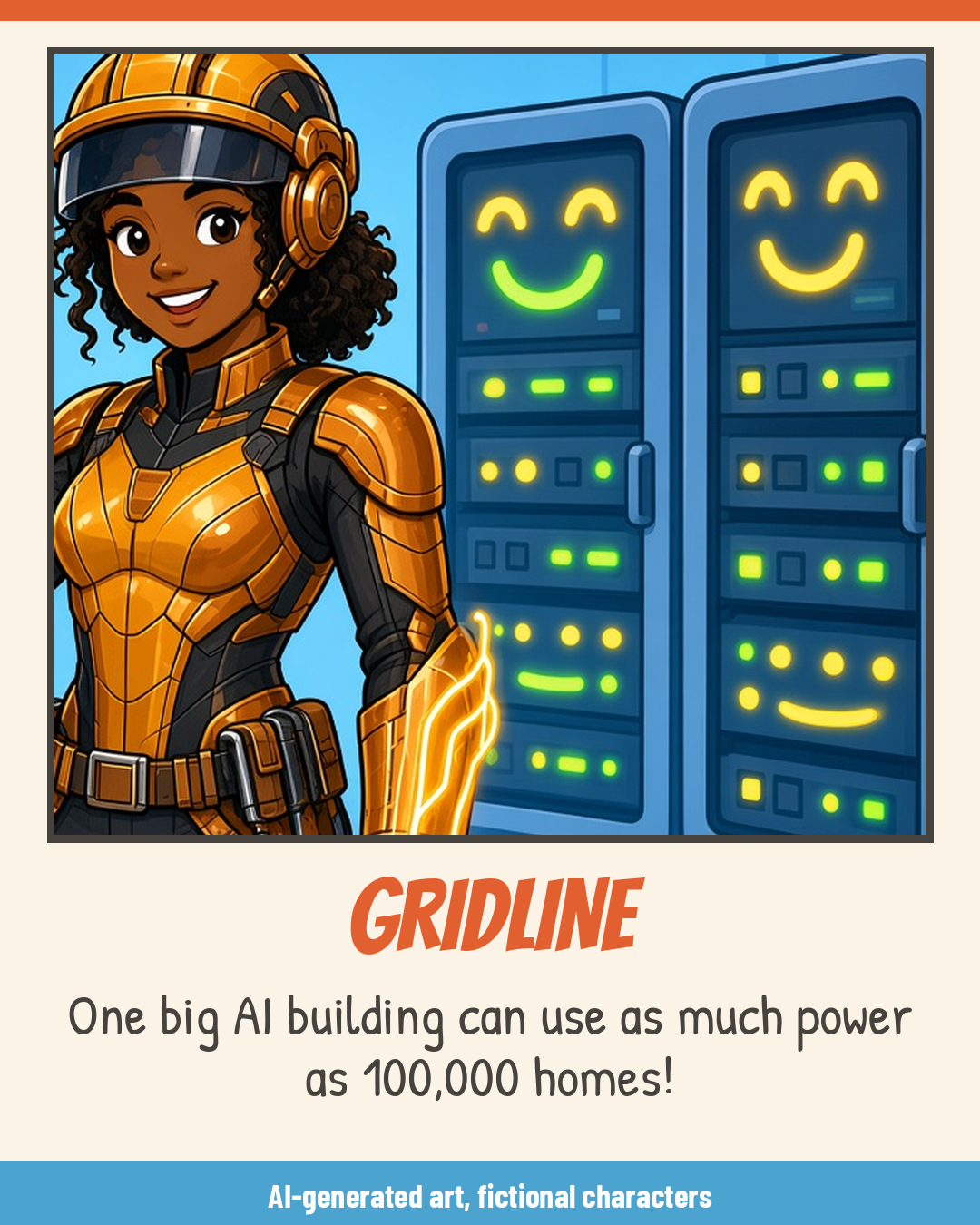
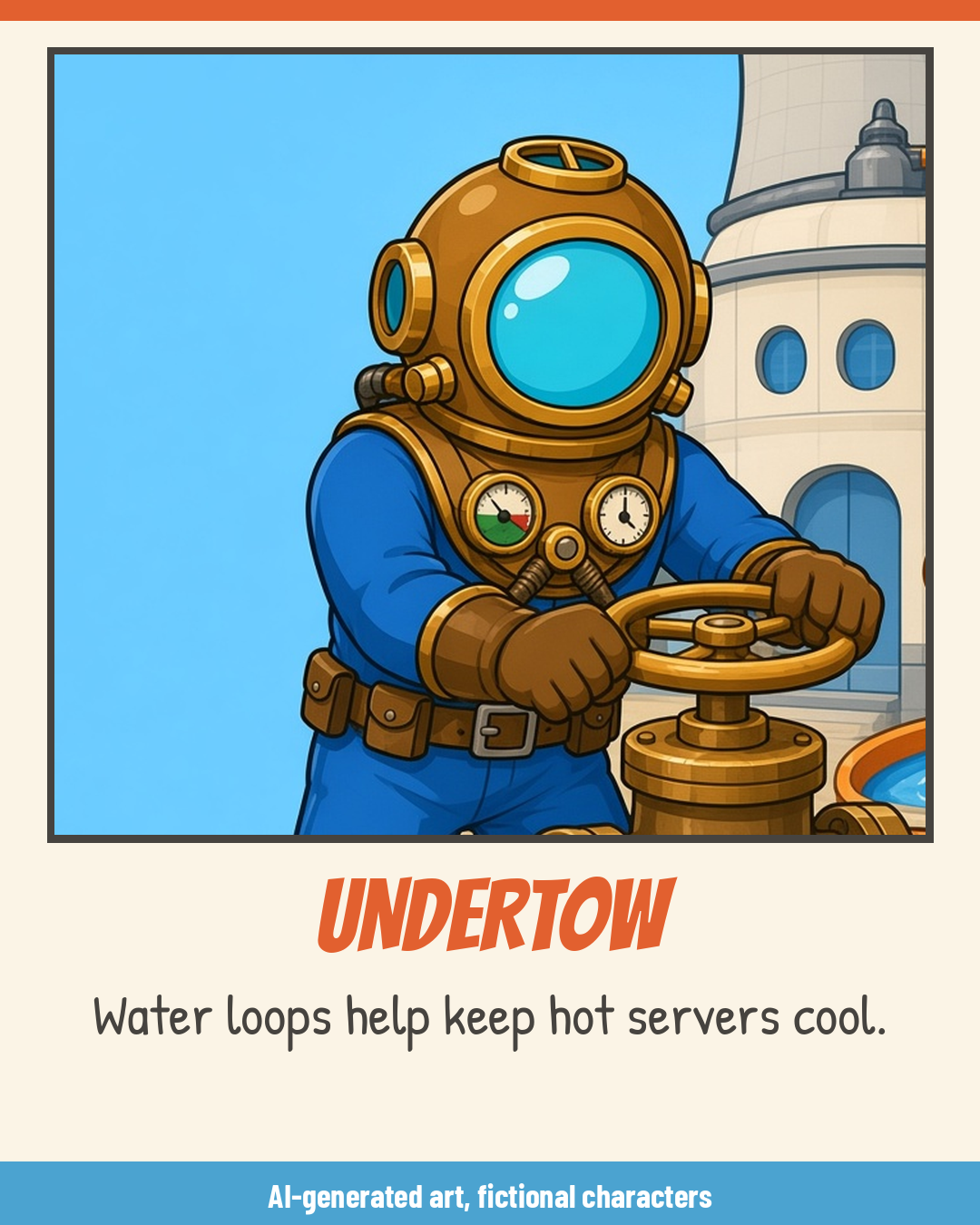
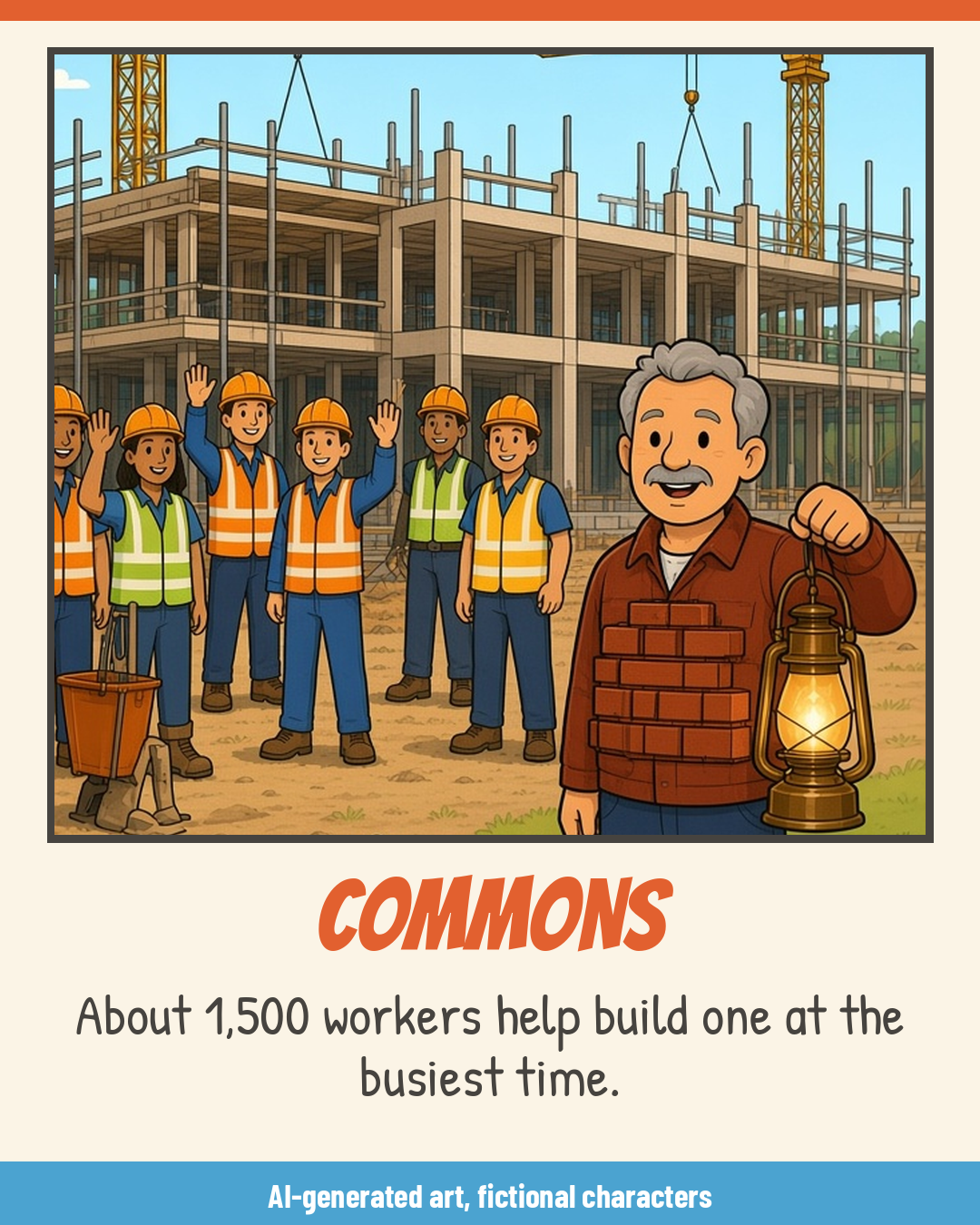
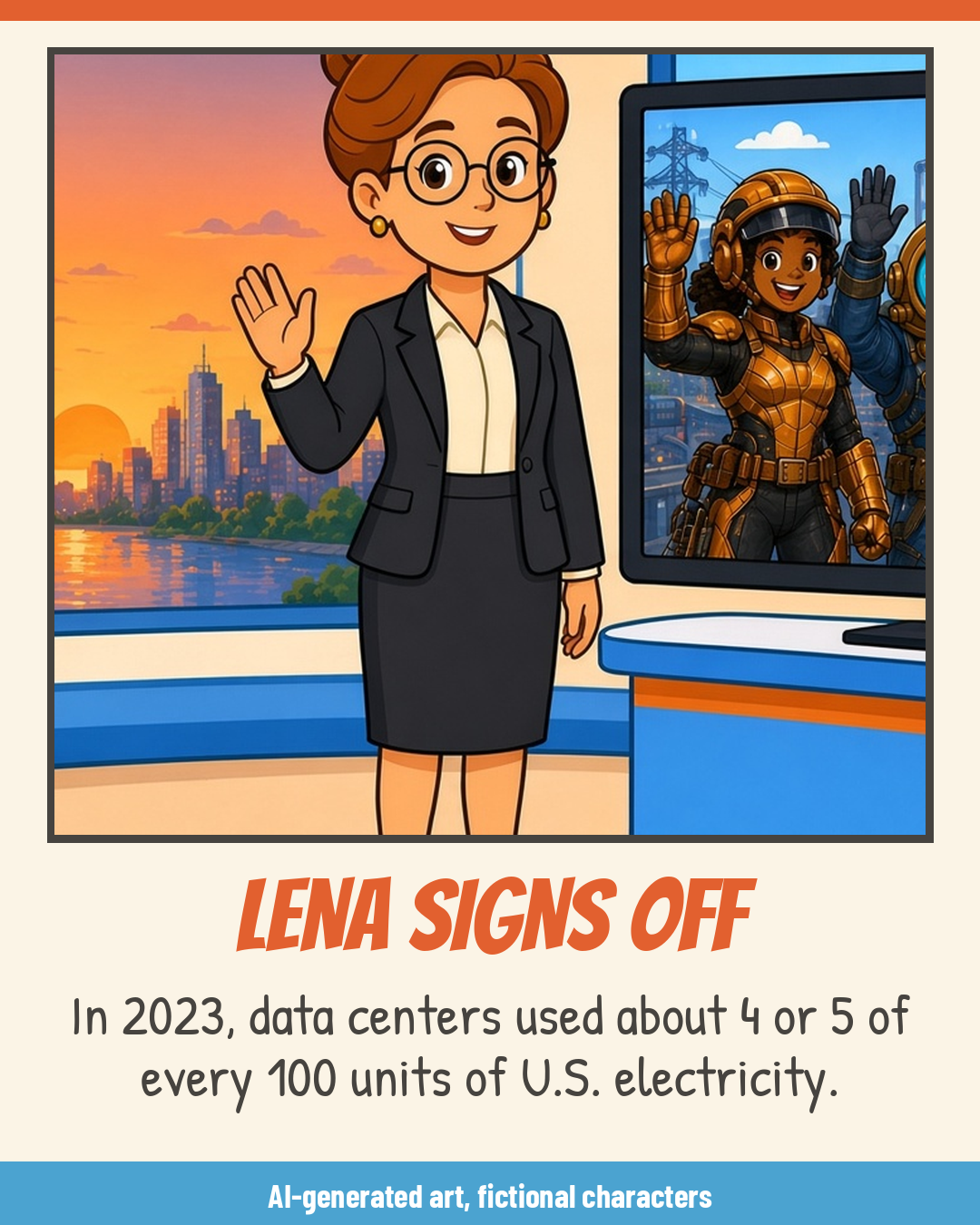
AI-generated art, fictional characters
4Teacher kit signup
Get the free teacher kit: lesson pages, discussion prompts and the sources behind every fact. We only ask for your name and email, nothing else. The button opens your own email app; no form, no tracking.
Sends to mbrown@gotbconsulting.com with the subject “Teacher Kit Signup”.
5Sponsor the comics
Help put free, accurate comics about AI and data centers in classrooms and libraries. Tell us about your organization and we will follow up.
Sends to mbrown@gotbconsulting.com with the subject “Inquiry: Comics Sponsorship”.
Free Comics Library
Read the finished comics free, every issue in Kids, Teen and Adult editions, with covers and full PDFs.
Infrastructure Guard Comics · School Edition
Undertow and the Hidden Pipes
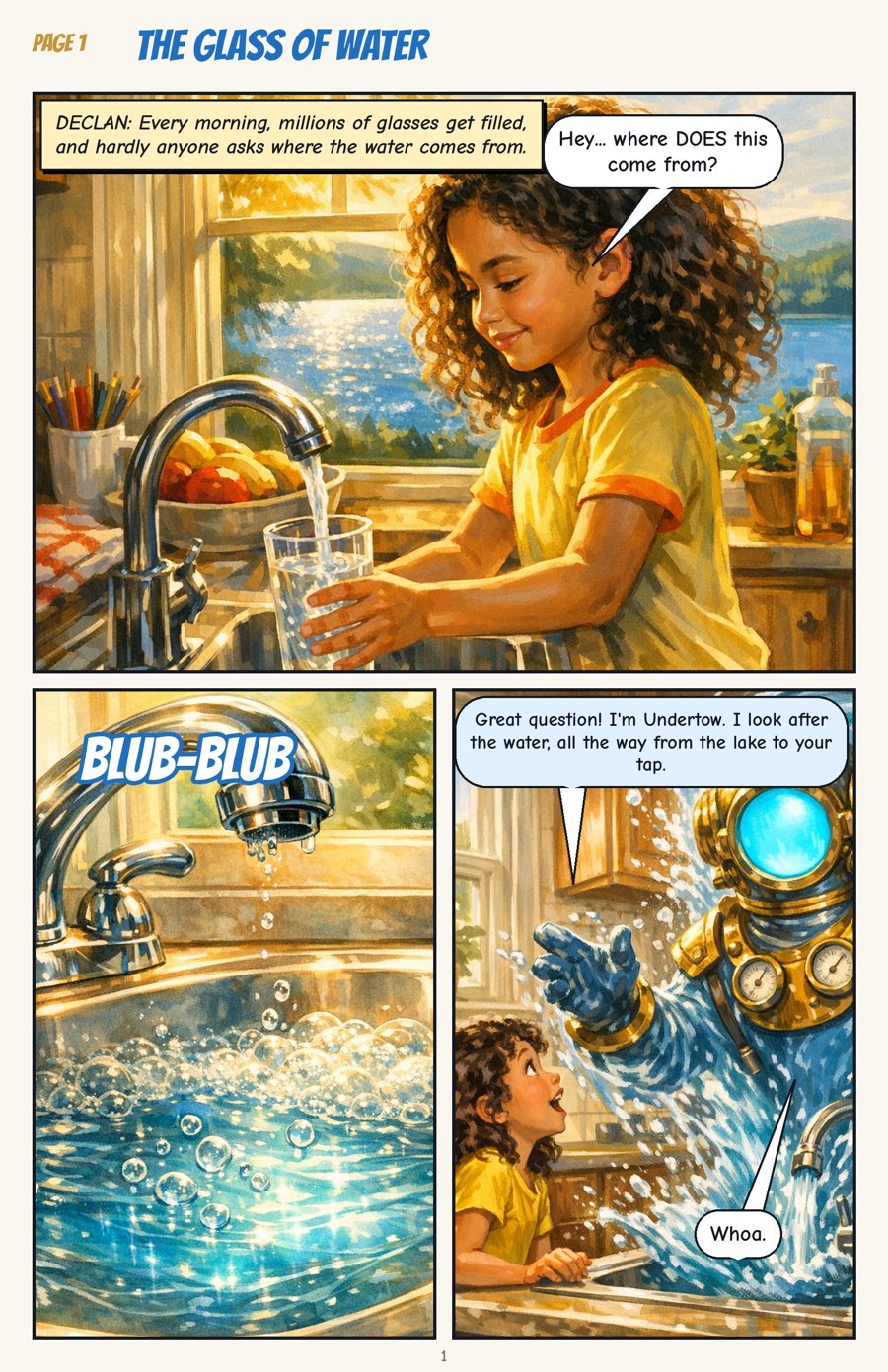
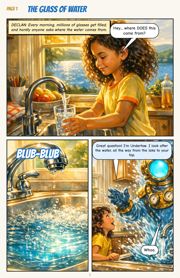
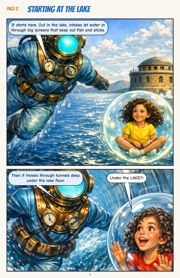
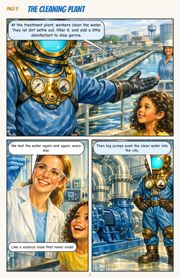
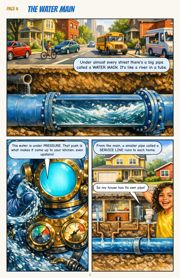
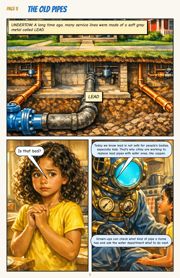
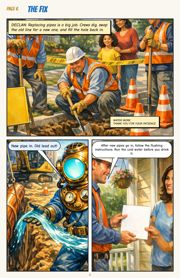
Issue #1 follows Jada, a curious nine-year-old, and Undertow, a hero in a lake-blue and brass diving suit, on the trip water takes from the lake to the kitchen tap: intakes, tunnels, the treatment plant, pumps, water mains and service lines. Along the way they learn why cities are replacing old lead pipes, and who builds, pays for and checks the work.
Grades 3-5 (read-aloud for K-2) · 8 story pages + cover · painted, kid-friendly art.
Get the classroom unit →Read Issue #1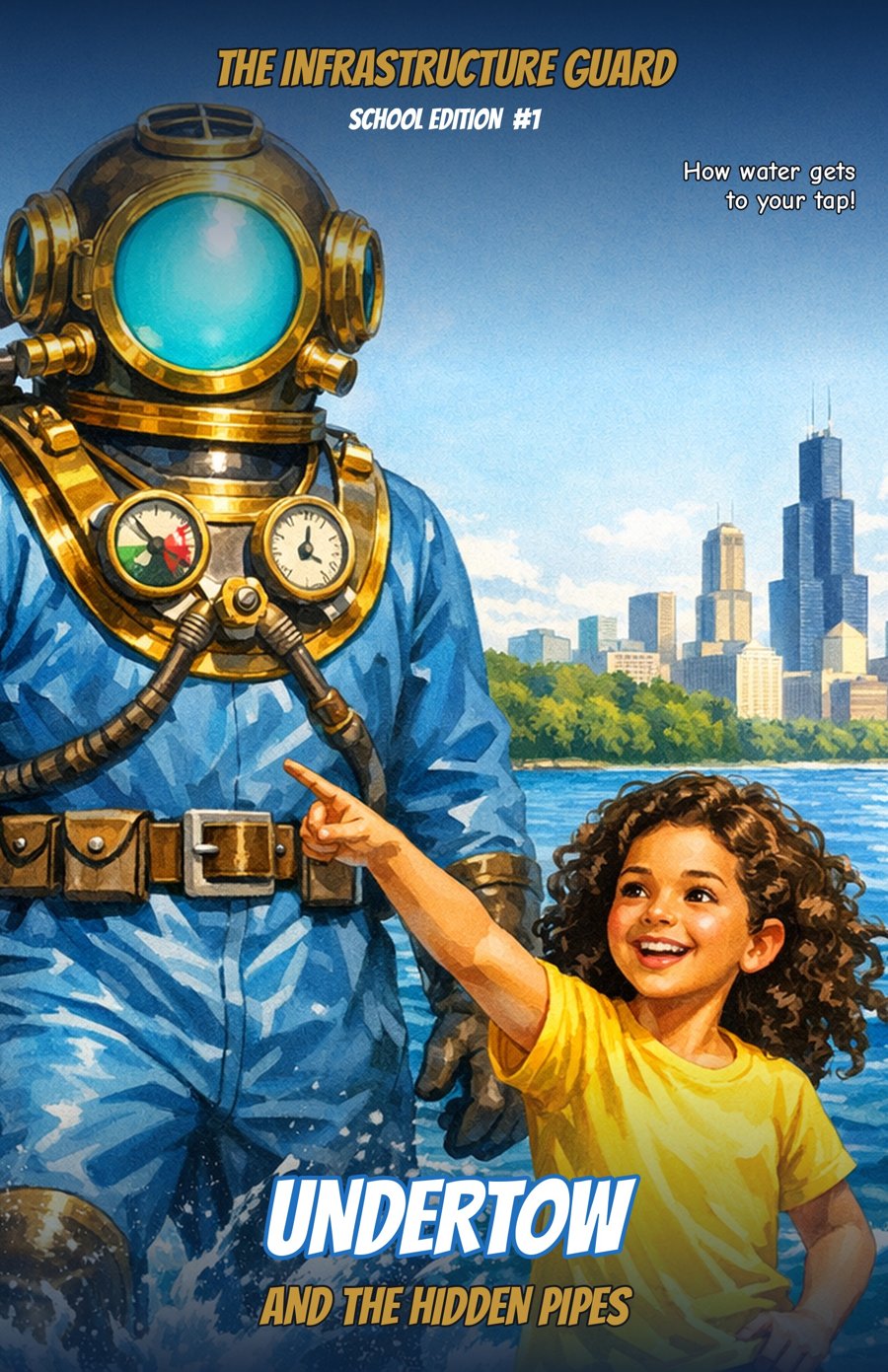
Pick Your Reader Level
Same city, same Guard, four different tones. Read the short example for your level and see which one feels like yours. Tap a comic to open it full size.
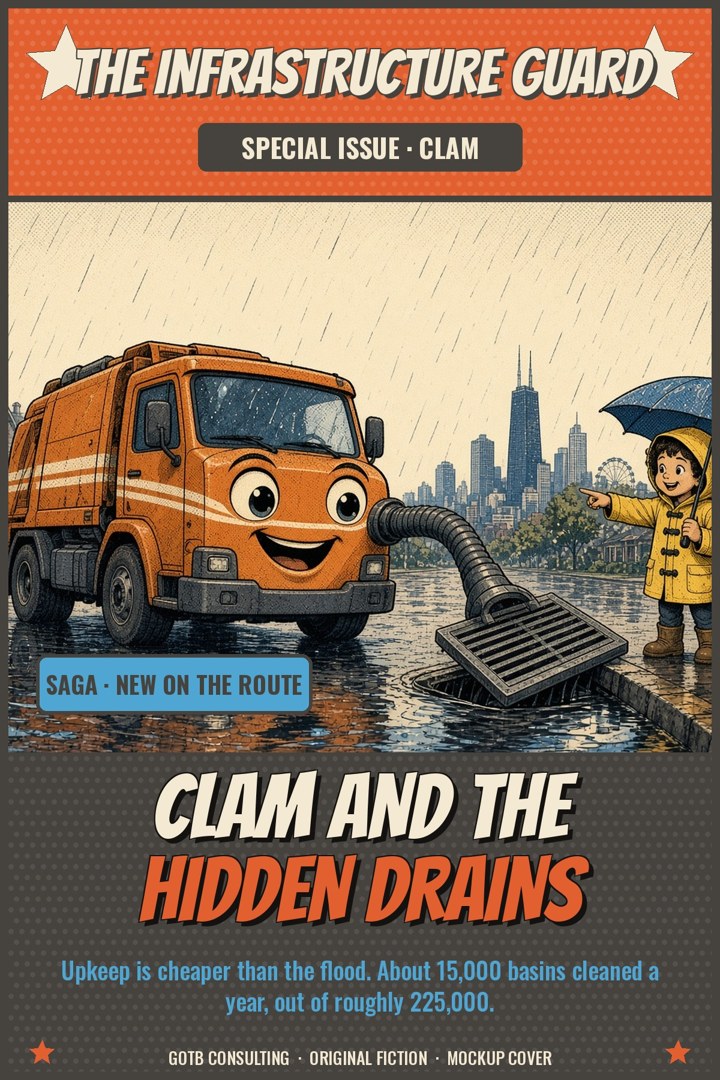
Level 1: Young Kids (6-9)
Example comic: Clam Cleans the Drain
Warm, silly and read-aloud. Big pictures, just a few words, and one thing to try at home.
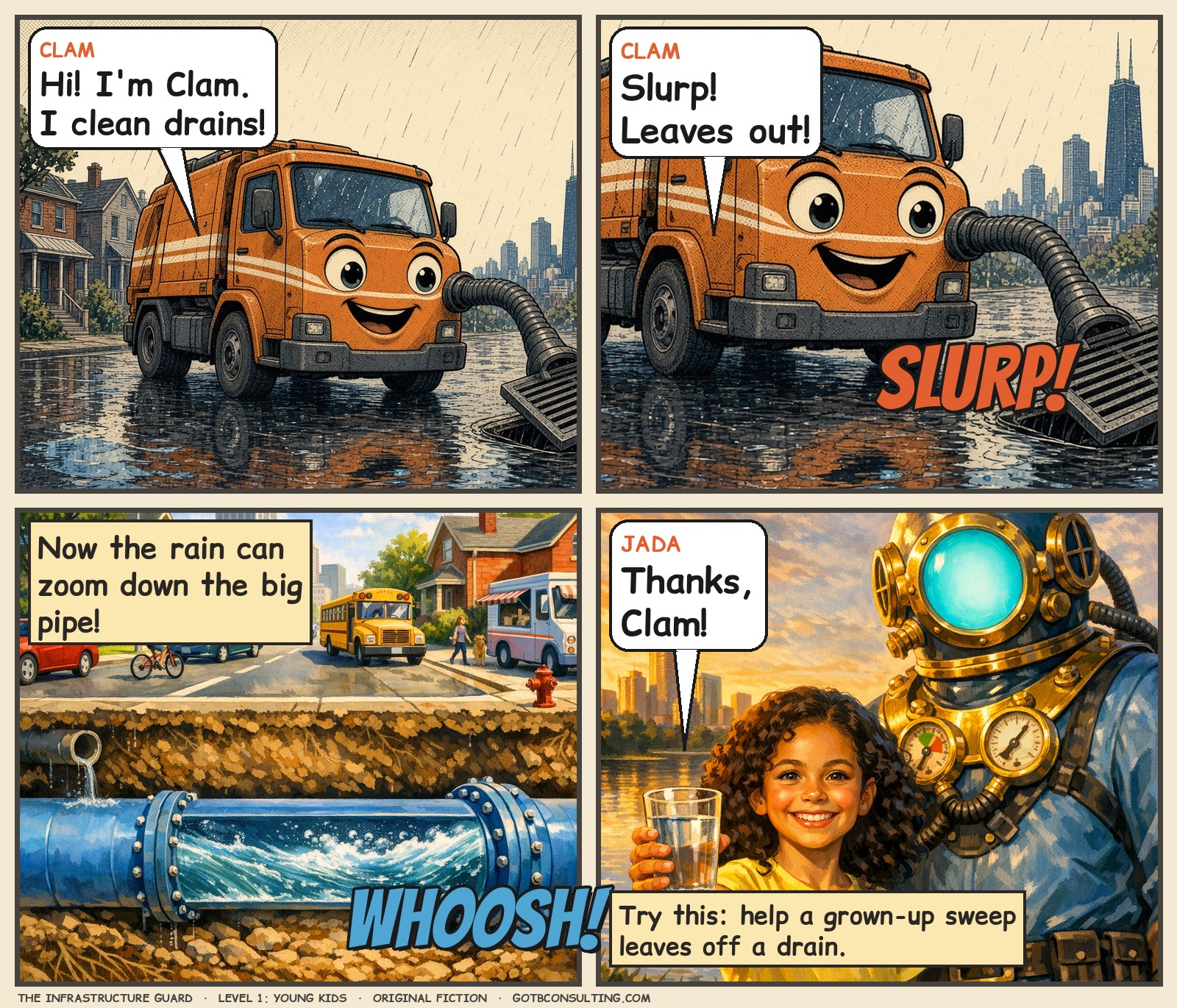
What GOTB would do: Keep the drains clear before it rains. Upkeep costs less than the flood.
Read the example as text
- Clam the catch-basin truck on a rainy street. Clam: "Hi! I'm Clam. I clean drains!"
- Clam sucks leaves out of a drain with his hose. Clam: "Slurp! Leaves out!" SLURP!
- Caption: Now the rain can zoom down the big pipe! WHOOSH!
- Jada holds a glass of water next to Undertow. Jada: "Thanks, Clam!" Caption: Try this: help a grown-up sweep leaves off a drain.
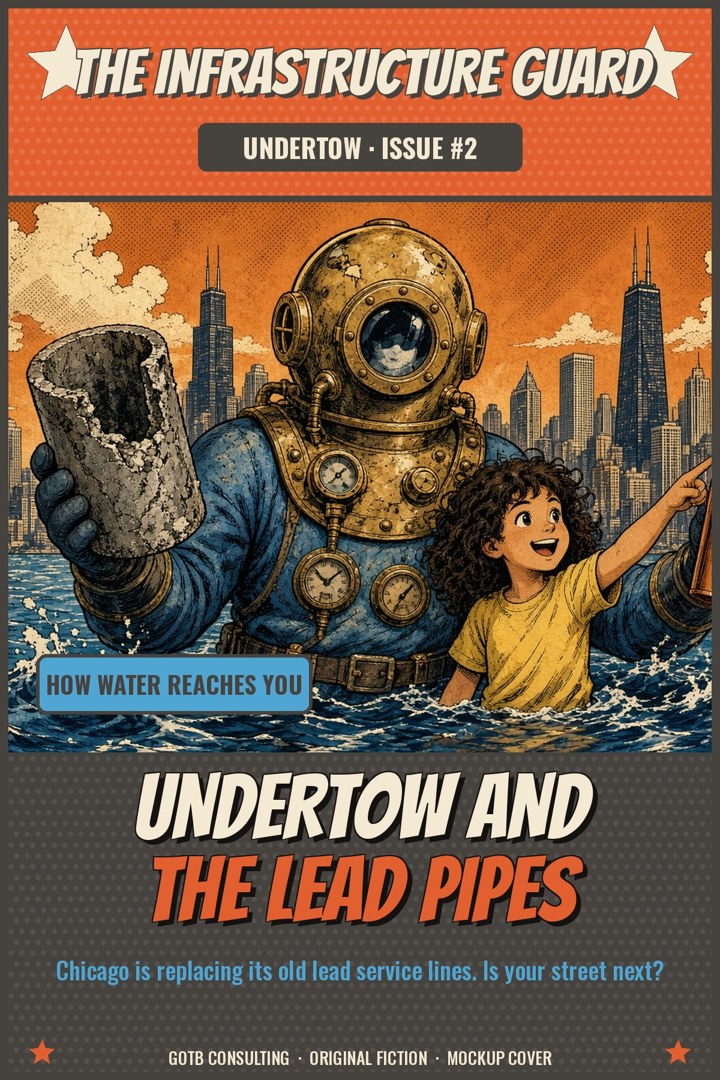
Level 2: Middle School (9-12)
Example comic: Clam and Undertow: The Leaf-Clogged Drain
Adventure and puns. Teamwork, a little cartoon fun, and how a city keeps its water moving.
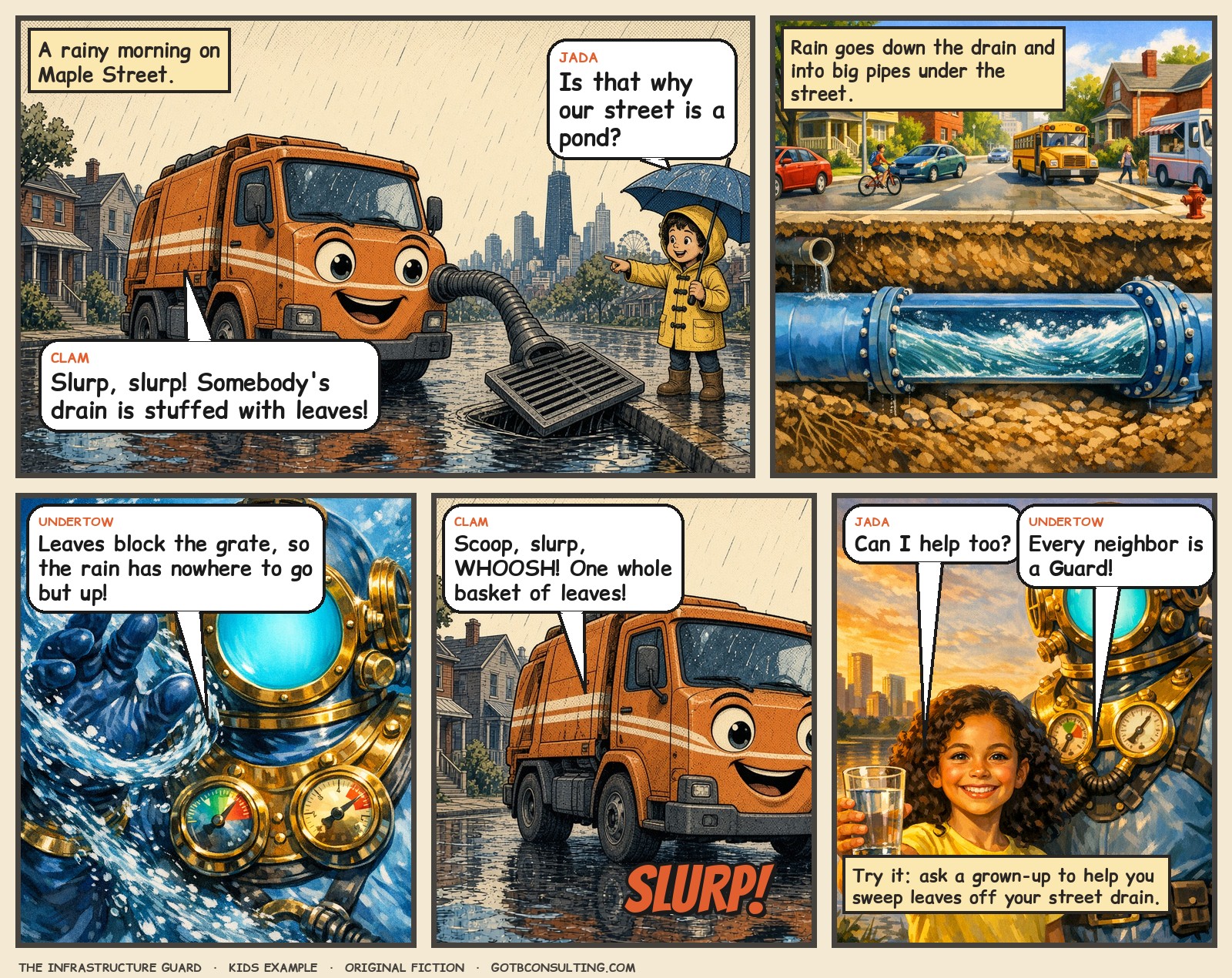
What GOTB would do: Clean and fix the drains on a schedule, before the storm, so streets stay dry.
Read the example as text
- Clam the catch-basin truck on a rainy morning on Maple Street. Clam: "Slurp, slurp! Somebody's drain is stuffed with leaves!" Jada, in a yellow raincoat: "Is that why our street is a pond?"
- Caption: Rain goes down the drain and into big pipes under the street.
- Undertow, in his lake-blue and brass diving suit: "Leaves block the grate, so the rain has nowhere to go but up!"
- Clam: "Scoop, slurp, WHOOSH! One whole basket of leaves!" SLURP!
- Jada: "Can I help too?" Undertow: "Every neighbor is a Guard!" Caption: Try it: ask a grown-up to help you sweep leaves off your street drain.

Level 3: High School and Older (13-17)
Example comic: The Candy Bowl Problem
Witty, a little sarcastic and fast. Painted spooky-comedy art, quick banter, and a habit of asking who checks the work. Nothing gory, nothing partisan.
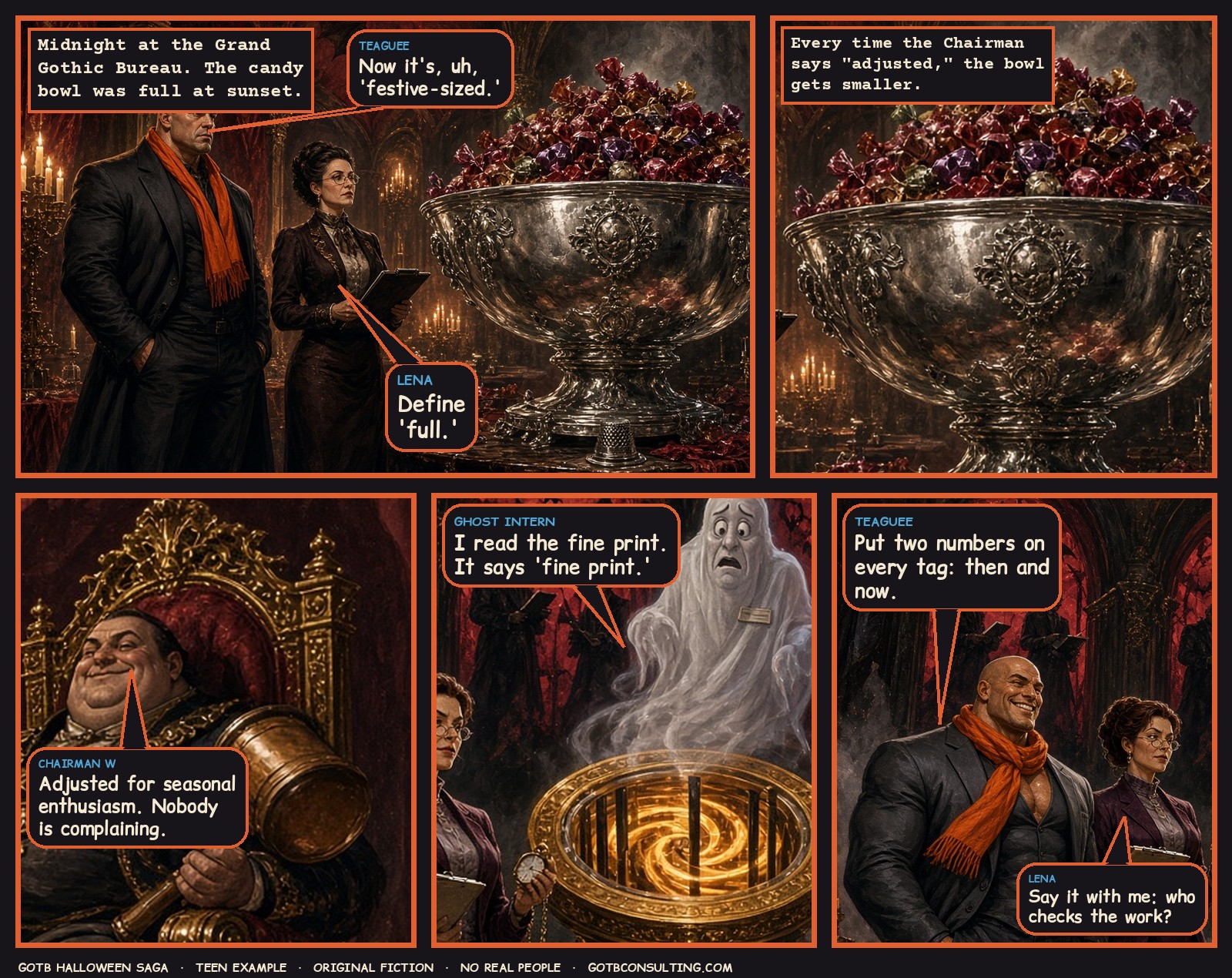
What GOTB would do: Put two numbers on every price tag, then and now, and publish them so anyone can check.
Read the example as text
- Caption: Midnight at the Grand Gothic Bureau. The candy bowl was full at sunset. Lena: "Define 'full.'" Teaguee: "Now it's, uh, 'festive-sized.'"
- Caption: Every time the Chairman says "adjusted," the bowl gets smaller.
- Chairman W: "Adjusted for seasonal enthusiasm. Nobody is complaining."
- Ghost Intern: "I read the fine print. It says 'fine print.'"
- Teaguee: "Put two numbers on every tag: then and now." Lena: "Say it with me: who checks the work?"
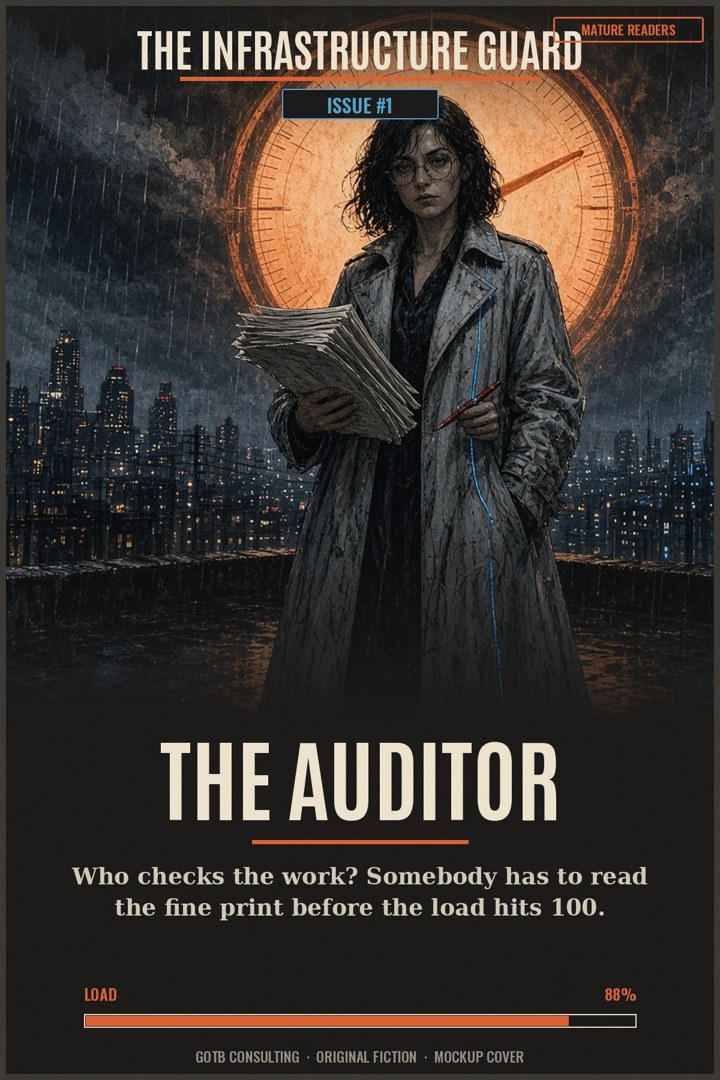
Level 4: Adult Sector (18+)
Example comic: The Auditor: After Dark
Cool, edgy and noir. Sharp lines, glamorous characters and tension you can feel. Suggestive, never explicit, and no gore. Made for adults who are young in mind and want GOTB's positions made easy to grasp.
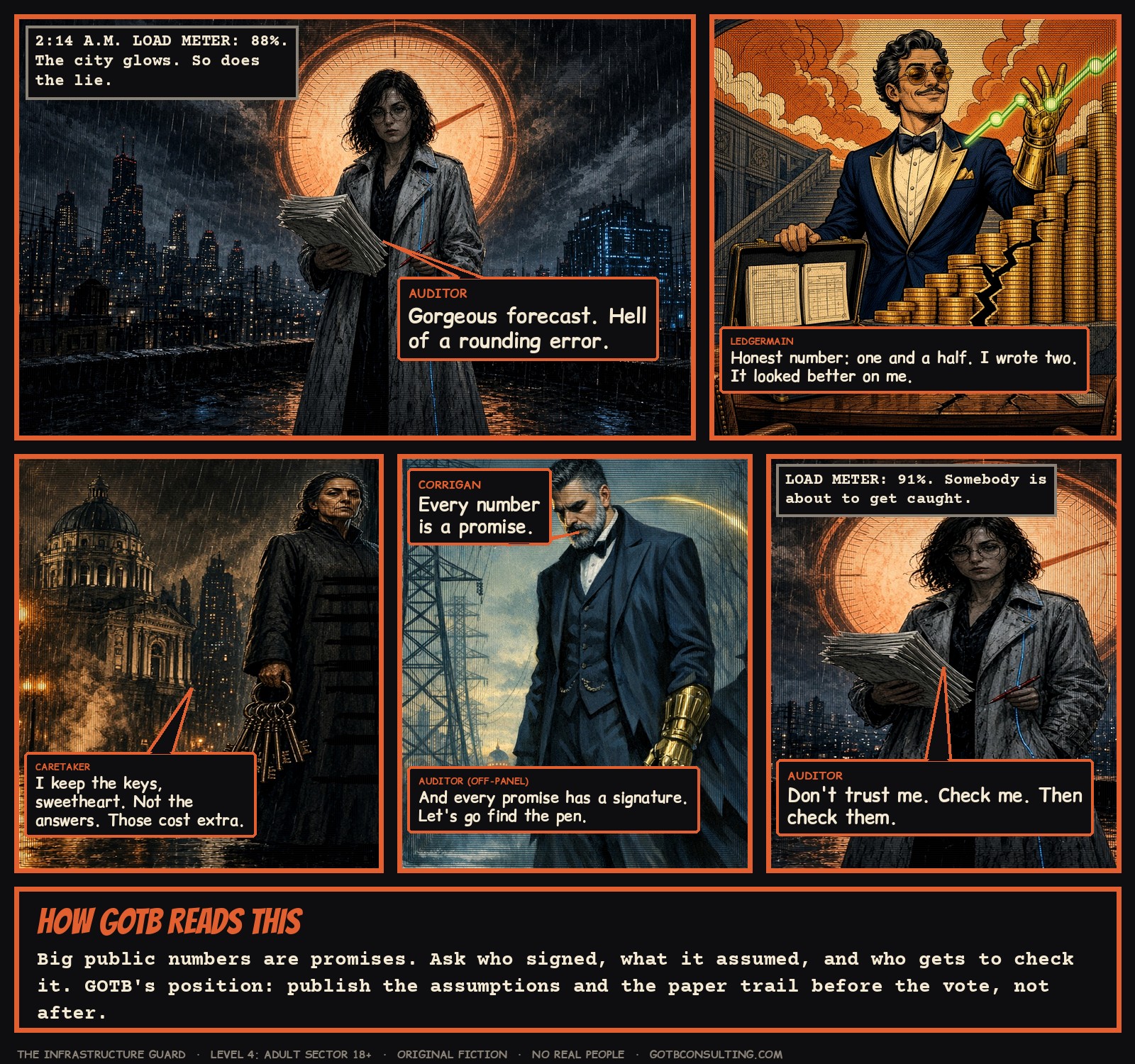
What GOTB would do: Publish the assumptions and the paper trail before the vote, not after.
Read the example as text
- Caption: 2:14 A.M. LOAD METER: 88%. The city glows. So does the lie. Auditor: "Gorgeous forecast. Hell of a rounding error."
- Ledgermain, in a gold-trimmed tuxedo beside a stack of coins: "Honest number: one and a half. I wrote two. It looked better on me."
- Caretaker, holding a ring of keys: "I keep the keys, sweetheart. Not the answers. Those cost extra."
- Corrigan, in the snow with his hat blown away: "Every number is a promise." Auditor, off-panel: "And every promise has a signature. Let's go find the pen."
- Caption: LOAD METER: 91%. Somebody is about to get caught. Auditor: "Don't trust me. Check me. Then check them."
- How GOTB reads this: Big public numbers are promises. Ask who signed, what it assumed, and who gets to check it. GOTB's position: publish the assumptions and the paper trail before the vote, not after.
Original fiction. The characters and places are fictional. These examples are free samples, more are on the way, and the Grades 3-5 classroom unit (Issue #1, below) is a separate product.
Read Issue #1

For teachers
What students learn
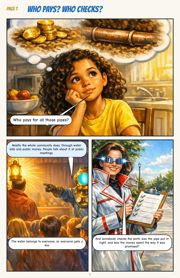
Students trace the water path in order (lake, intake, tunnel, treatment plant, pumps, water main, service line, tap), explain pressure, and learn in calm, practical language why lead service lines are being replaced. Page 7 opens a simple civics conversation: who pays, and who checks the work?
How it fits your lesson
A ready-to-teach 45-minute lesson with a “Be the Engineer” design challenge connected to NGSS 3-5 Engineering Design, and a discussion of community roles connected to the C3 Framework civics strand for grades 3-5. Facts are simplified for kids; the teacher guide lists the public sources.
For parents
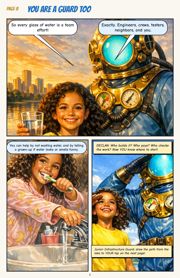
A gentle, friendly story about where tap water comes from, with no scary moments. When the comic talks about lead pipes, Undertow keeps it simple: grown-ups can check what kind of pipe a home has and ask the local water department what to do next. In Chicago, families can start at leadsafechicago.org. Kids finish with a coloring page and a “Junior Infrastructure Guard” challenge.
Inside the classroom unit
Get the classroom unit
Comic, teacher guide, worksheets, poster and coloring page, ready to print.
The Infrastructure Guard characters and the Lake City are fictional. They are not affiliated with or endorsed by any government agency or utility. Facts are simplified for young readers.








Fictional characters from GOTB’s original stories. Real-world facts always link to public sources.